How to Buy a Home When Rates Rise
Mortgage rates rising does not automatically mean you should wait to buy a home. Buying a home when rates rise can still make sense if the property fits your budget, you expect to stay several years, and you negotiate terms that reduce upfront costs. Seller concessions, rate buydowns, and flexible financing can improve the numbers.
Should you buy a home when mortgage rates rise?
The short answer: maybe—but do not try to perfectly predict the market. Mortgage rates can rise, fall, or jog sideways like they forgot why they entered the room. Your decision should be based on affordability, long-term plans, available inventory, and the complete monthly payment—not headlines alone.
A higher rate affects borrowing power. For example, a $400,000 mortgage at 6.5% generally has a higher principal-and-interest payment than the same loan at 5.5%. But waiting also has a cost. Home prices may increase, desirable homes may become more competitive, or your rent may continue funding someone else’s retirement plan.
Consider buying now when:
- You can comfortably afford the payment, taxes, insurance, and maintenance.
- You plan to stay in the home for at least several years.
- You have stable income and emergency savings.
- You find a home that meets your needs at a reasonable price.
- You can negotiate concessions or other favorable terms.
Consider waiting when the payment would stretch your budget, your employment is uncertain, or you are buying mainly because of pressure from family, social media, or a suspiciously enthusiastic open-house balloon.

How do rising rates change your buying power?
Mortgage rates influence how much house you can buy for a target payment. When rates rise, buyers often qualify for less unless they increase their down payment, choose a lower-priced property, or negotiate a better loan structure.
Focus on the full housing payment, including:
- Principal and interest
- Property taxes
- Homeowners insurance
- Mortgage insurance, if applicable
- HOA dues
- Utilities and expected maintenance
Ask a lender to compare several scenarios instead of giving you one dramatic number. Request estimates for different prices, down payments, loan terms, and interest rates. Then compare the cash required at closing and the ongoing payment.
A useful rule: never rely on a future refinance to make today’s purchase affordable. Refinancing may become possible, but it depends on future rates, your credit, your equity, closing costs, and market conditions. Buy only if the current loan works for your budget.
What are seller concessions?
Seller concessions are costs the seller agrees to pay on your behalf at closing, within loan-program and contract limits. They can reduce the cash you need upfront or help lower your payment through an interest-rate buydown.
Concessions are not free money. Sellers may request a higher price, reject another offer, or prefer a buyer with fewer conditions. Still, in a slower or more negotiable market, they can be a powerful tool for first-time buyers.
Potential concessions include:
- Closing costs and prepaid taxes or insurance
- Discount points to reduce the interest rate
- A temporary interest-rate buydown
- Lender fees, appraisal fees, or title charges
- Repairs, credits, or a home warranty
Your lender must confirm what is allowed. Concession limits vary by loan type, down payment, occupancy, and transaction details.
Smart ways to use seller concessions
1. Request help with closing costs
This is often the simplest strategy. Ask the seller to contribute a specific dollar amount toward eligible closing expenses rather than vaguely requesting “help.” A precise request gives everyone a clearer target.
This may preserve more of your savings for moving, furniture, emergency repairs, and the traditional first-year homeownership surprise: discovering that every appliance has a personal grudge against you.
2. Buy down the interest rate
You may use concessions to purchase discount points. Paying points upfront can reduce the interest rate for the life of the loan. Ask your lender to calculate the break-even period:
Break-even period = cost of points ÷ monthly payment savings
If the savings take seven years to recover but you expect to move in four, the strategy may not be worthwhile. If you plan to stay longer, permanent points could make sense.
3. Use a temporary 2-1 buydown
A temporary buydown reduces the interest rate for the first one or two years, with the payment returning to the note rate afterward. This can provide breathing room while you adjust to homeownership or wait for a possible refinance opportunity.
Important: qualify for and budget for the full future payment. Treat the early savings as a cushion—not permission to buy a home you cannot afford at the permanent rate.
4. Negotiate a repair credit
Instead of asking the seller to complete every repair, request a credit for eligible work. This can give you more control after closing, particularly when you have trusted contractors or know the property’s systems well.
For major safety or structural issues, a credit may not be enough. Review inspection findings with your agent and appropriate professionals before agreeing to terms.
5. Combine concessions with a price adjustment
Sometimes the best offer is a balanced combination: a reasonable price reduction plus a smaller credit. A lower price reduces the loan balance, while a concession helps with immediate cash needs.
Have your lender compare both options. A lower price does not always improve your monthly payment as much as a rate buydown, and a large credit may be limited by closing costs.
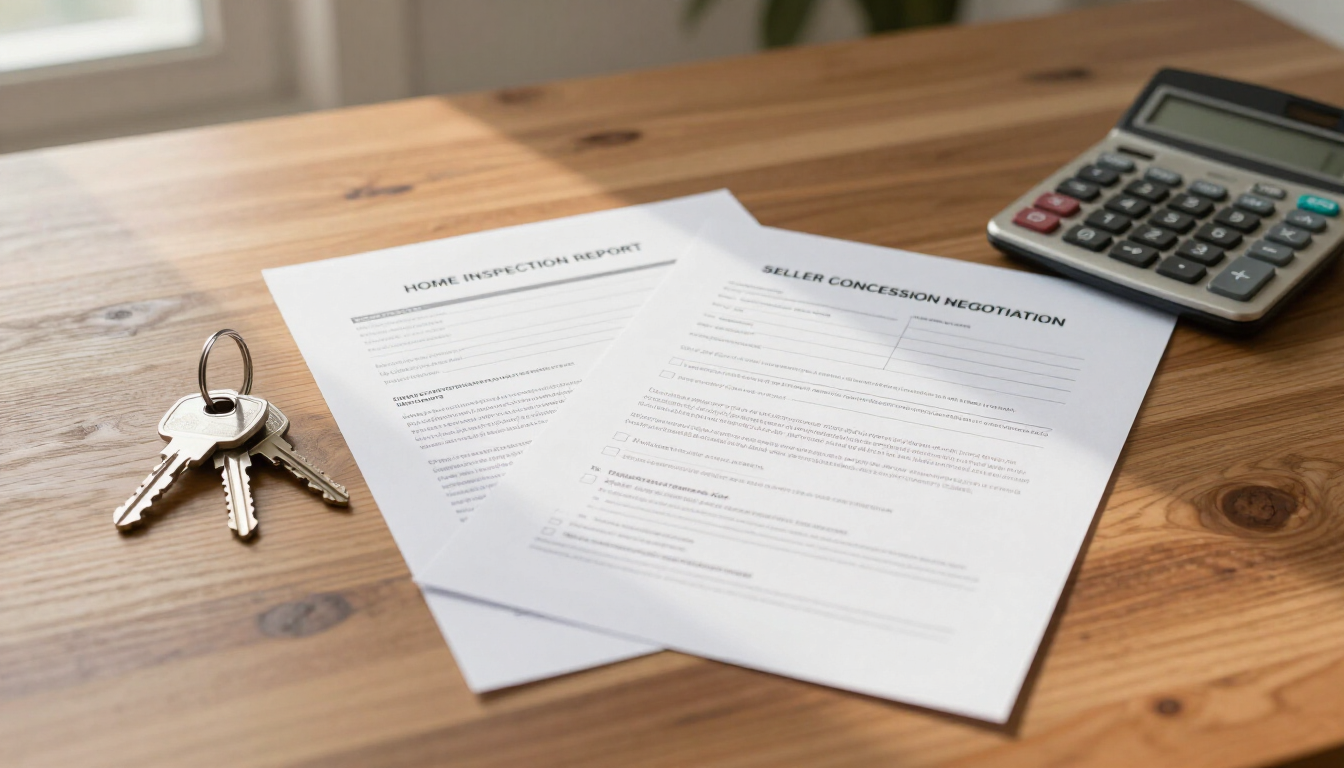
How should you negotiate seller concessions?
Start with your priorities. Do you need cash for closing, a lower first-year payment, help with repairs, or protection from a major expense? Tell your real estate agent and lender early so they can structure an offer that fits your loan rules.
A strong negotiation usually includes:
- A clear concession amount or requested item.
- A lender-approved explanation of how funds can be used.
- Supporting inspection findings or comparable market data.
- A realistic offer price that reflects the home’s condition.
- A backup plan if the seller declines.
You might also negotiate seller-paid HOA transfer fees, a home warranty, a rate-lock extension, prepaid insurance, or specific repairs. The exact options depend on the contract, lender, property, and local practice.
What mistakes should first-time buyers avoid?
Avoid these common errors:
- Assuming rates will definitely fall soon
- Ignoring taxes, insurance, HOA fees, and maintenance
- Using every dollar for the down payment
- Accepting a concession without checking loan restrictions
- Comparing only interest rates instead of total loan costs
- Waiving inspections to appear more competitive
A concession should solve a real financial problem, not simply make an offer look clever. Ask for a loan estimate and closing disclosure, then compare the actual numbers.
A practical decision framework
Before making an offer, write down three numbers: your comfortable monthly payment, maximum cash to close, and minimum emergency reserve. Then ask your lender to model the home with the current rate, a permanent buydown, and a temporary buydown if available.
Next, evaluate the home itself. Is the location suitable? Are the major systems in reasonable condition? Would you still want the property if rates stayed high for several years? If the answer is yes and the payment works, rising rates alone may not be a reason to walk away.
For local market context, you can also follow News & Updates and browse the site’s Blog for additional home-buying guidance.
Key takeaways for buying in a rising-rate market
- Buy based on a payment you can afford today, not a hoped-for refinance.
- Compare the full cost of waiting with the full cost of buying.
- Use seller concessions for closing costs, points, buydowns, repairs, or prepaid expenses.
- Have your lender verify concession limits and calculate the long-term impact.
- Negotiate the overall deal, not just the interest rate.
If you find the right home and the numbers are sustainable, buying a home when rates rise can still be a reasonable move. Start with your budget, compare loan scenarios, and use seller concessions strategically. The goal is not to win a prediction contest; it is to create a purchase you can comfortably live with—both financially and literally.
Recent Posts